Showing posts with label AI. Show all posts

Friday, March 30, 2007

Nanotechnology Q&A, Pt I ~more

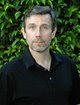
Ray Kurzweil Ray Kurzweil is a 21st Century Renaissance man; inventor, entrepreneur, writer, futurist and much more.

His write-up at Wikipedia gives you a brief glimpse into an extraordinary mind:

"Kurzweil was the principal developer of the first omni-font optical character recognition system, the first print-to-speech reading machine for the blind, the first CCD flatbed scanner, the first text-to-speech synthesizer, the first electronic musical instrument capable of recreating the sound of a grand piano and other orchestral instruments (which he developed at the urging of Stevie Wonder, who was amazed by his OCR reading machine), and the first commercially marketed large-vocabulary speech recognition system. He has founded nine businesses in the fields of OCR, music synthesis, speech recognition, reading technology, virtual reality, financial investment, medical simulation, and cybernetic art."

Bill Gates dubbed him "the best at predicting the future of artificial intelligence."

He has been described by the Wall Street Journal as "the restless genius."

In 2001 he wrote an essay, "The Law of Accelerating Returns," where he laid out one of his most well known theories, concerning the exponential growth pattern of technologies.

It states, in short:

"An analysis of the history of technology shows that technological change is exponential, contrary to the common-sense 'intuitive linear' view. So we won't experience 100 years of progress in the twenty first century—it will be more like 20,000 years of progress (at today's rate). The 'returns,' such as chip speed and cost-effectiveness, also increase exponentially. There's even exponential growth in the rate of exponential growth. Within a few decades, machine intelligence will surpass human intelligence, leading to The Singularity—technological change so rapid and profound it represents a rupture in the fabric of human history. The implications include the merger of biological and nonbiological intelligence, immortal software-based humans, and ultra-high levels of intelligence that expand outward in the universe at the speed of light."

Recently I had a chance to catch up with him, and posed the following question: "If you had the attention of the entire world, what would you say regarding molecular manufacturing?"

Here is his response: "When we have full molecular manufacturing, we will be able to create any physical products we need from information files just as we can create music, movies, and books from pure information today. In about twenty years, the original goals of communism ("from each according to their ability, to each according to their needs") will be achieved not through forced collectivism but through the information technologies of nanotechnology and artificial intelligence."

Learn more about Ray Kurzweil at http://en.wikipedia.org/wiki/Ray_Kurzweil

Monday, March 5, 2007

Exploring Tomorrow – A Report from the World Future Society

The following are five forecasts from The World Future Society and its magazine THE FUTURIST.

Social and Technological Forecasts for the Next 25 Years

Forecast #1: Hydrogen fuel cells will be cost competitive by 2010. The cost of power via fuel cell is dropping rapidly-from $600,000 per kilowatt-hour in the 1970s to $1,200 today. By 2012, fuel cell power is expected to cost around $400 per kilowatt-hour. It would then be competitive with every type of power. Fuel cells will power cars and allow each home to have its own non-polluting electricity generator.

Forecast #5: Speculation in hydrogen energy stocks could create an investment bubble, as happened with the Internet. When investors see the huge potential of hydrogen energy, the stocks of companies with promising technologies may skyrocket to unsustainable levels.

Forecast #6: Ocean Currents May Surpass Wind as an Energy Source. Turbines driven by ocean currents could generate four times more electricity than windmills. At one site alone-in the Channel Islands off the coast of France-the potential electricity could match that produced by three nuclear power plants.

Forecast #8: Weapons of mass destruction will be even easier to obtain over the next 15 years. Terrorists may move from bombs to creating havoc on the cellular level. The weapons of the future-genetic engineering and nanotechnology-require neither large facilities nor mass materials.

Forecast #9: The convergence of genetic engineering, nanotechnology and robotics will allow humans to change their bodies in profoundly new ways. In the next 15 years, people may be able to rearrange their genes to change their physical features, extend their lifespan, merge their brains with computers and their bodies with robots, among many other remarkable developments.

I bring these to your attention because nanotechnologies play an enabling role in each scenario.

Specific to nanotechnology, they also offer these forecasts for the next 15 years:

Two to five years from now:

  1. Car tires that need air only once a year.
  2. Complete medical diagnostics on a single computer chip.
  3. Go-anywhere concentrators that produce drinkable water from air.

    Five to 10 years:

  4. Powerful computers you can wear or fold into your wallet.
  5. Drugs that turn AIDS and cancer into manageable conditions.
  6. Smart buildings that self-stabilize during earthquakes or bombings.

    10 to 15 years:

  7. Artificial intelligence so sophisticated you can't tell if you're talking on the phone with a human or a machine.
  8. Paint-on computer and entertainment video displays.
  9. Elimination of invasive surgery, since bodies can be monitored and repaired almost totally from within.

I highly recommend reports from the WFS as well as membership. There are very few sources of credible information about the future, and fewer still at the rate WFS charges.

For details, visit www.wfs.org/foresight/

(Full disclosure: I was not paid for or otherwise compensated for this endorsement.)

Friday, March 2, 2007

FutureCar, Pt IV

Another series of made for TV programs from the Discovery Channel, FutureCar examines today’s technologies and designs and how they might lead to tomorrow’s vehicles.

The 4th of 4 programs is titled "The Brian." This program speculated that in the year 2030 we will see:

  • A worldwide network (a vehicle web, or "automatrix")
  • Highways without speed limits
  • No drivers
  • No accidents
  • No traffic jams

All the above based on the fact that as digital power increases, so does safety. Their speculation is based on an interconnection of computers, roadways, people and cars, as well as on advances in computing power and ubiquitous sensing.

And featured these future vehicles:


  • Rinspeed Senso (http://www.rinspeed.com/pages/cars/senso/pre-senso.htm)
  • GM Intern Design Program: Cocoon and Nanny Car
  • MIT Media Lab "stackable" cars

As was the case with the previous three programs, car enthusiasts will love this show, as will those that study the future.

Nanotechnology is explicitly mentioned this time in regards to sensors; they use Moore’s Law to illustrate that by 2030 computers will have more than 3,000 times the processing power as today’s computers. I found a quote by Michio Kaku interesting "the application of nanotechnology, artificial intelligence and micro-sensor technology will shake everything up concerning our car." As with the previous programs, nanotechnologies are implicitly a factor in such things as self-healing paint and color-changing body colors.

Bottom line: the whole series is worth the watch.

To learn more, visit discovery.com/futurecar

Friday, February 2, 2007

It is the year 2030

Get your motor runnin…

Even if it is silent. Fuel cells will finally bring about the “quiet car.” No sound when it “starts up” and none (other than the advanced composite tires on the road) as it moves along. You will, however, be able to broadcast sound effects; give it the sound of a 1970 SS 454 Chevelle, or tune it to be a street racer, or… And you won’t be needing those keys; biometrics will allow your car to recognize you as long as your wrist-comp remains connected to your personal ‘net. Once you approach close enough for the stereoscopic cameras to “verify” you, your car will automatically unlock the doors, prep your specified seat position and controls, upload your destination coordinates, and await your verbal command to get moving. Oh yeah, unless your override, all commands will be verbal, except steering, acceleration, and braking when in manual mode.

Head out on the highway…

Well, OK, it’ll be a sensor-monitored and -controlled highway. While drivers from 2007 will recognize it as such, functionally it will be very different. For one, you won’t need to do the driving, your car (assisted by the highway network) will do the driving for you. You’ll get to catch up on your email, do your nails, or any one of a million other tasks, all the while the hwy-net does the work. Need to arrive at your destination in less time than the tourists? No problem, just tell your car to choose one of the faster lanes.

Lookin’ for adventure…

How about a 100-mile long public track that simulates various driving conditions, including 90-degree banks, obstacle courses, and virtual landscapes? It will have the same sensor system as the highway, above, but will allow you to control steering, braking, and speed. Your new 2030 Pontiac NanoScorpion (built in a factory by trillions of nanomachines) will take you around the track at speeds as high as your body is able take the G-forces. Should you choose the “high speed” section of the track, wearing your military-grade flight suit enables you to withstand much higher G’s.

Or whatever comes my way.

Coming your way in 2030 will be “cars” serving as dial-a-ride public transport, autonomous ambulances (as well as manned versions with built in diagnosis and treatment functionality), recreation-specific, recyclable, fuel cell powered wonders.

They will not pollute when running, or when being dismantled for recycling. The processes used to construct them (and their materials) will contribute less to the waste stream and to general pollution (and may even amount to zero waste). They will protect you in crashes that today would turn you into a tangled mess, while avoiding over 90% of those that early 21st Century drivers experienced. They will also be highly customizable to their owner’s tastes, and convertible from one format (such as “dune buggy”) to another (such as “highway cruiser”) by simply mounting a new body (ten minutes at a “body shop”) and reconfiguring the suspension.

It is 2030, and things have definitely changed

Can you imagine driving in any major city, and being able to safely breathe the air?

Can you imagine being free from the idiocy surrounding the use of petroleum? Free from the latest nut case with a bomb, a grudge, or a fervor-of-the-week membership.

Imagine tomorrow’s automotive technologies; technologies that will allow your “car” to perform feats of exquisite ballet; coming to fetch you, delivering you on time, and giving you time to relax or catch up on your stuff. Protecting you from harm and being gentle on the environment, drastically reducing humanity’s negative impact on the Earth.

Wednesday, January 31, 2007

2057 - The City

Last night I watched 2057 – The City. See yesterday’s post on The World for more on the series.

The theme for this production could be titled "A Boy and His Holo-Pet" or possibly "Boy Crashes City ‘Net." Without giving away too much detail, I’ll say that this production was as good overall as The World. Covered here: holographic pets, self-guided networked cars, smart homes, robotics, police force technologies, intelligent surveillance, and holographic data storage.

Michio Kaku makes one very pertinent statement: "As we become more dependent on technology, just remember …computers can crash, technology can fail."

I highly recommend that you add this one to your list to watch.

In a future blog note I’ll review the other program in the series: The Body.

To learn more about this program, visit:
http://dsc.discovery.com/convergence/2057/about/about.html