Wednesday, February 28, 2007

Picture of the day


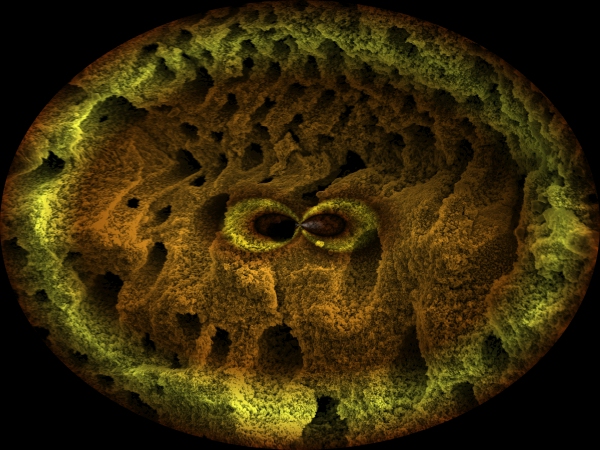
Looking@nano


Rense Andries Posthumus, Looking@nano, NanoArt 2006


From NanoArt 2006. © Copyright Rense Andries Posthumus (click to see larger version)

NANOART is a new art discipline related to micro/nanosculptures created by artists/scientists through chemical/physical processes and/or natural micro/nanostructures that are visualized with powerful research tools like Scanning Electron Microscope and Atomic Force Microscope.

NanoArt could be for the 21st Century what Photography was for the 20th Century. We live in a technological society, in a new Renaissance period, and there is no reason for Arts to stay away from Technology. NanoArt is the expression of the New Technological Revolution and reflects the transition from Science to Art using Technology.


See all of Rense Andries Posthumus' NanoArt 2006 entries here, or visit the artist's website.

Please contact me if you would like to submit an image. (rocky at bir-consulting.com)

Quote of the day

In computer simulation tests, Boris Yakobson and his colleagues at North Carolina State University subjected the stringlike nanotubes to extreme stresses. "We wanted to see how flexible or brittle they are," said Yakobson, "and found they're amazingly flexible, unusual for graphite, which in large scale seems brittle." In twisting, bending, compressing and putting the virtual nanotubes on the rack, the physicists showed the structures could be stretched by almost 30 percent without breaking. Theoretically, they were strong enough to create a thread able to sustain 150 GPa (gigapascals), equivalent to holding a 20-ton weight on a 1 millimeter thread.

Read the entire article at Omni Magazine.

Interview with Jennifer Fonstad

Back in august of 2004 I interviewed Jennifer Fonstad of Draper Fisher Jurvetson (DFJ) on investing in nanotechnology. The following is an excerpt from that interview.

RR: What is your definition of nanotechnology?

More than just a scale of measurement, nanotechnology harnesses and exploits the many unique characteristics of working at the nanoscale. The capacity to manipulate and control matter at the atomic level was driven by the development of tools such as the atomic force microscope (AFM). As more tools enable that manipulation, technologists across a wide spectrum of industries use these capabilities in truly unique and disruptive ways in their business.

RR: Overall, what do you like about nano as an investment area?

We see significant opportunity in materials science and in the manipulation of matter at the atomic scale. Catalyzed by critical tools such as the AFM and sequencing of the human genome, these advances promise to enable a host of new applications that are based on the often unique properties that are exhibited at such a small size. Carbon nanotubes, for example, are stronger than steel, highly conductive, and are precisely ordered. Far from being scientific curiosities, these structures may enable a new generation of nonvolatile memory, which is the focus of one of our portfolio companies, Nantero.

Read the entire interview here

Tuesday, February 27, 2007

Picture of the day


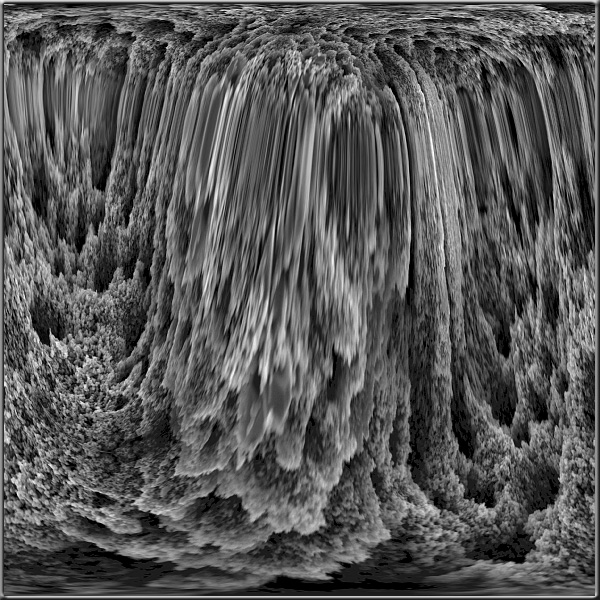
Nano Niagra


Dolores Glover Kaufman, Nano Niagra, NanoArt 2006

From NanoArt 2006. © Copyright Dolores Glover Kaufman (click to see larger version)

NANOART is a new art discipline related to micro/nanosculptures created by artists/scientists through chemical/physical processes and/or natural micro/nanostructures that are visualized with powerful research tools like Scanning Electron Microscope and Atomic Force Microscope.

NanoArt could be for the 21st Century what Photography was for the 20th Century. We live in a technological society, in a new Renaissance period, and there is no reason for Arts to stay away from Technology. NanoArt is the expression of the New Technological Revolution and reflects the transition from Science to Art using Technology.

See all of Dolores Glover Kaufman's NanoArt 2006 entries here, or visit her website.

Please contact me if you would like to submit an image. (rocky at bir-consulting.com)

Quote of the day

"Nanotech is where breakthroughs are likely. Forget about just the cancer-detection and other advanced medical tools it's midwifing and the next-gen consumer electronics such as super-bright displays. On a planet that's on the cusp of catastrophic climate change, nano-engineered materials have the potential to make a real difference. Imagine solar power cells that are far cheaper and more efficient; batteries that allow for more efficient electric cars; components that make cleaner coal-fired power plants. These and other applications are hardly trivial--they'll save energy, reduce pollution, and maybe go a little way to making sure Times Square won't be under water for the next millennium celebration. "

~David Talbot, Technology Review link


At the very heart of nanotechnology and its future promise are the tools, instruments, metrological devices, and modeling/simulation applications that will enable us to effectively position matter and build intricate structures with atomically-precise control. Many novel instruments have been created and today they are accelerating the pace of developing innovative top-down and bottom-up manufacturing processes. Soon they will enable us to fabricate materials, components, devices, and products on a more cost-effective, highly-repeatable, and replicable basis.

Nanomanufacturing Conference & Exhibits

Advanced materials, Pt. I

Another area that my consulting team helps clients with is advanced materials. So today, I will recap news about nanotechnologies and materials. As this is a major area within “nanotechnology” I will cover it on a monthly basis.

These bits span the period December 30, 2006, through January 12, 2007.

ENTA (the European Nanotechnology Trade Alliance) announced a free and confidential service for UK companies. The service assists companies in reporting data on engineered nanoparticles to the UK government, in an effort to insure that the particles are developed safely.

SDCmaterials announced the appointment of Joseph R. Bronson to its Board of Directors.

Paul Hansma, Patricia Turner and Rodney Ruoff announced their paper “Optimized adhesives for strong, lightweight, damage-resistant, nanocomposite materials: new insights from natural materials.” Nanotechnology 18 (2007) 044026 (3pp).

NanoComp was featured in an article touting their nanotube advances. They have the ability to weave them into fibers and fabric; very attractive technologies for the military. (http://www.nanocomptech.com/)

Researchers at MIT and GKSS Research Center (Germany) announced shape-memory polymers that are able to change shape based on their temperature. (http://www.ncbi.nlm.nih.gov/entrez/query.fcgi?cmd=Retrieve&db=PubMed&dopt=Abstract&list_uids=17116879)

University of Minnesota researcher Andreas Stein (and team) reports that they have developed a new technique for creating nanoscopic cubes and spheres of silicon dioxide. They are now able to de-construct larger structures to get the shape they want. (http://www.chem.umn.edu/groups/stein/)

University of Dayton Research Institute announced a $15 million contract with the US military for composite-based armor for vehicles. They expect that if all goes well the new armor will be available next year. Companies involved include TPI Composites and Armor Holdings Inc. The materials they create for the military are expected to show up in civilian applications such as wind turbine blades, automobile bodies, containers, and other areas where light weight and high strength are essential. (http://www.udri.udayton.edu/)

“A team of researchers from ETH Zurich in Switzerland and Zhejiang University in PR China have demonstrated nanorobotic spot welding using single-crystalline copper-filled CNTs inside a transmission electron microscope (TEM).” (http://www.nanowerk.com/spotlight/spotid=1192.php)

University of Pennsylvania research physicist A.T. Charlie Johnson reports on nanotube/epoxy mixes that may lead to stronger glues. (http://www.lrsm.upenn.edu/~nanophys/)


Please contact me at rocky at bir-consulting.com for detailed reports on this or any other "nanotech" area, including advanced materials, nanomedicine, energy, cleantech, etc.